
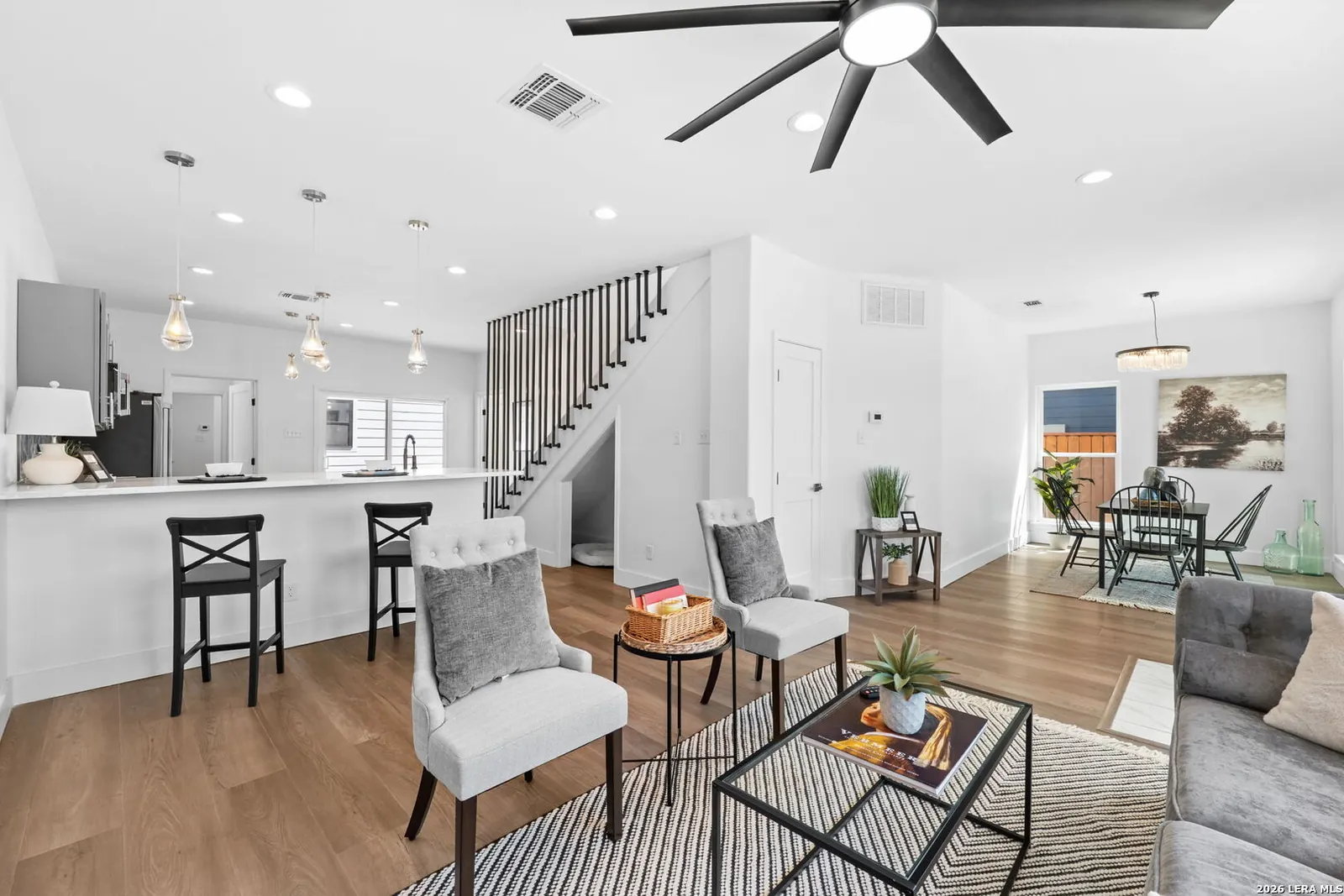
By Valarie Adams · September 10, 2026
How Should a San Antonio Realtor Use Staging to Clarify an Unused Bonus Room Before Listing?
An unused bonus room can confuse buyers when photos show storage, oversized furniture, or several competing uses. Use this Realtor-focused staging framework to choose one honest purpose, preserve flexibility, and present the room clearly.
What Should a Realtor Decide Before Staging an Unused Bonus Room?
Decide what the room should help a buyer understand first. An unused bonus room often becomes a storage zone because its purpose has not been chosen. In listing photos, that can make the space look unfinished or smaller than it is. The staging decision is to give the room one believable function that fits its actual features, then keep the rest of the presentation flexible.
Possible uses include an office, media lounge, fitness area, craft room, playroom, or reading space. The right choice depends on the room's location, daylight, privacy, outlets, flooring, dimensions, and storage. A room above a garage may work well as a media or hobby area but need a different conversation around temperature, access, or noise. A bright room near the main living area may read more clearly as an office or flexible work area.
Start with the use that is easiest to understand without explanation. The goal is not to show every possible future use at once. A desk, sofa, exercise machine, and craft table competing in the same frame create uncertainty. One clear arrangement gives buyers a starting point while the listing description can mention other reasonable possibilities.
NAR's 2025 Profile of Home Staging reports that 83 percent of buyers' agents said staging made it easier for buyers to visualize a property as a future home. That finding is national professional-opinion evidence, not a promise about one San Antonio listing. It supports using staging to make the room legible, not making a claim about what the room will do for every buyer.
How Can You Score the Room's Possible Uses?
Score each possible use from one to five against the room's real characteristics before choosing furniture. This keeps the Realtor and seller from selecting an attractive setup that does not fit the space. The highest score is not a guarantee of buyer response. It is a way to choose the most truthful and understandable presentation.
Use the same questions for an office, media lounge, fitness area, craft room, playroom, or other bonus-room idea. A room can support more than one use, but the listing photo set should lead with one. Write down the score and the reason so the seller can explain the choice consistently during showings.
Use this decision aid:
- Room fit: Does the room's location and access support the proposed use?
- Daylight: Does the available light help the function read clearly in photos?
- Privacy: Does the room offer the separation that the use needs?
- Features: Do outlets, flooring, windows, storage, and built-ins support the setup?
- Scale: Can the room hold one useful anchor piece without losing circulation?
- Audience fit: Is the use likely to make sense for the listing without overstating what the room is?
What Furniture Makes the Chosen Purpose Legible?
Use one correctly scaled anchor piece and two or three supporting elements. An office may need a desk, chair, lamp, and a small amount of storage. A media lounge may need a sofa or two chairs, a compact table, and a restrained media console. A fitness area may need one piece of equipment, a mat, and enough visible floor area to show how the room works.
Furniture scale matters because an oversized piece can make the bonus room feel smaller, while undersized pieces can leave it feeling empty. Measure the anchor piece against doors, windows, walkways, and the room's usable dimensions before it arrives. Keep the path into the room open and avoid placing furniture where it hides the feature that makes the room useful.
A staged room should not look like a storage unit with a label. Remove boxes, loose cords, excess shelving, unused toys, and personal overflow before styling. If the room must hold some household storage during the listing, use contained storage that stays outside the main photo angle. A small, intentional amount of furniture communicates more than a crowded collection of possible uses.
For a Realtor who needs to separate a quick edit from a larger scope, a San Antonio staging consultation can identify which pieces belong, what should move, and whether the seller's furniture can show the room at a useful scale. A consultation is a practical next step when the room looks unclear even after obvious clutter is removed.
How Should Listing Photos Present a Bonus or Flex Room?
Photograph the room from an angle that shows both the staged function and the room's dimensions. The first image should help the viewer understand what the room is, where the circulation runs, and which features remain available. Keep doors, windows, built-ins, and usable floor area visible when they are part of the room's value.
Avoid staging or photographing the space as though it were materially larger or more private than it is. Excessive wide-angle distortion can make a small room look misleadingly deep. A tight crop that hides the doorway or window can also create the wrong expectation. Listing Picture Tips from the National Association of REALTORS supports clear composition, useful lighting, and restraint with wide-angle effects.
Complete the basic photo preparation before the final styling pass. Remove personal items, paperwork, pet supplies, and loose storage. Check the floor, windows, light fixtures, and visible surfaces. Then confirm that the anchor piece is still scaled correctly from the intended camera position. A room that looks balanced from the doorway can feel crowded from the photographer's angle.
Organize the final photo-day reset only after deciding what the bonus room is supposed to communicate. That order keeps cleanup from replacing the more important staging decision.
How Can You Describe Flexible Use Without Misleading Buyers?
Describe the room as a bonus or flex room staged for the selected use unless the property's bedroom status has been verified. A room can function well as an office, guest space, media lounge, or hobby area without being marketed as a legal bedroom. The Texas Real Estate Commission's advertising guidance supports avoiding materially inaccurate or misleading descriptions in listing marketing.
Use specific, supportable language. Examples include bonus room staged as an office, flex room with a media lounge setup, or upper-level bonus space shown as a craft room. The description can add that other uses may be possible based on the buyer's needs. It should not imply that the room meets bedroom requirements, has a particular permitted use, or includes features that have not been confirmed.
Keep the photo, room label, and showing conversation aligned. If the image shows an office but the description calls it a bedroom, the listing creates a question that staging cannot solve. If the image shows a media lounge and the description calls it unfinished storage, the presentation gives away clarity the room could have provided. Consistency is the useful goal.
When a buyer, seller, broker, or other party asks about records, permits, measurements, egress, or legal classification, send that question to the appropriate qualified professional. A staging plan can make a room easier to understand. It cannot verify a property condition or legal use.
When Should a Realtor Bring in Staging Support?
Bring in staging support when the room's strongest use is unclear, the seller's furniture is the wrong scale, or storage overflow keeps returning after basic cleanup. A consultation is often a good first step when the Realtor needs a room-by-room recommendation before deciding whether the seller can complete the work or whether a broader service fits.
A Realtor can prepare for the conversation by noting the photography target, listing timeline, room measurements, access limits, furniture the seller wants to keep, and any daily-use requirements. That information helps a stager recommend a setup that can survive showings instead of looking good for one appointment and collapsing afterward.
A pre-listing walkthrough can also help organize the broader listing conversation when the bonus room is one of several spaces that need a purpose and a clear preparation owner. Keep the scope specific. The question is what presentation problem exists, what action addresses it, and who owns that action before photos and showings.
The final recommendation should be easy for the seller to repeat. Choose one truthful use, use furniture that fits, clear the path and features, photograph the room without distortion, and describe it as a bonus or flex room unless its classification is verified. That gives the listing a clear presentation without closing off reasonable future uses.
Related home staging services
Sources
- 2025 Profile of Home Staging, National Association of REALTORS
- Easy Fixes for the Most Common Buyer Turn-Offs in Staged Homes, National Association of REALTORS
- 8 Tips to Make Your Listing Picture Perfect, National Association of REALTORS
- TREC's Advertising Rules: What You Need to Know, Texas Real Estate Commission
How Should a San Antonio Realtor Use Staging to Clarify an Unused Bonus Room Before Listing? FAQs
Should a bonus room be staged as a bedroom?
Only if the property's bedroom status and relevant requirements have been verified by the appropriate professional. Otherwise, stage it as a bonus or flex room for an honest use such as an office, media lounge, or craft room.
How much furniture should go in an unused bonus room?
Use one correctly scaled anchor piece and two or three supporting elements. Keep the doorway, circulation, windows, and useful floor area visible so the room does not look crowded.
What if the seller wants the room to show several possible uses?
Lead with one believable function in the photos and mention other reasonable possibilities in the description. Several competing setups usually make the room harder to understand.
When should a Realtor request a staging consultation?
Request one when the room's purpose is unclear, the available furniture is the wrong scale, or the seller needs help deciding between a focused edit and a broader staging scope.