
By Valarie Adams · July 3, 2026
Should You Stage a Small San Antonio Home?
Small homes can show beautifully, but only when buyers can quickly understand the rooms. This guide helps San Antonio sellers choose between a focused occupied-staging plan, a partial install, and a lighter photo-prep approach.
What makes a small home feel harder to sell in photos?
The dining chair that blocks a hallway, the desk pushed into a bedroom corner, and the crowded kitchen counter can change how a buyer reads the whole floor plan. Square footage is not the only thing a listing photo communicates. Buyers are trying to picture where their furniture goes, how they move from room to room, and whether the storage looks workable.
That is why a small home can need staging even when it is clean and well cared for. The listing-presentation leak is usually visual noise or a room that is doing too many jobs at once. A living room that also holds exercise equipment, a guest bed, and office supplies may be useful day to day. In photos, it can make the room feel smaller and leave buyers unsure of its purpose.
The National Association of REALTORS® reports that surveyed buyer agents see staging as helping buyers visualize a property as a future home. That is useful industry context, not a promise about what one San Antonio listing will sell for or how quickly it will move. The practical question is simpler: can a buyer understand the room in a few seconds? If the answer is no, the room deserves attention before the photographer arrives.
Should you begin with occupied staging or a full furniture install?
If you are living in the home, occupied staging is usually the first conversation. The goal is to edit what you already own, adjust placement, and bring in only the pieces that solve a specific photo or showing problem. It can be a better fit than removing every familiar item and filling the house with rentals.
An occupied-staging plan often starts with the main living area, primary bedroom, kitchen, entry, and the room most likely to confuse a buyer. You might remove an extra chair, move a bulky cabinet, pack the overflow from open shelves, or set up one clear function for a flex room. Those choices can create a readable path and show the scale of the room without pretending the home is larger than it is.
A full install may be worth comparing when the home is vacant, the current furnishings are badly scaled for the rooms, or the floor plan still reads poorly after editing. A partial install can sit between those options. It may furnish the living room and dining area, then leave bedrooms lightly styled. Staging services can be discussed room by room, so the budget follows the rooms that need the most help.
Ask for a plan that names the problem each recommendation solves. Adding furniture is vague. Showing that the living room fits a seating area without closing the route to the patio gives you a real decision to make.
How do you stage for scale without overcrowding the room?
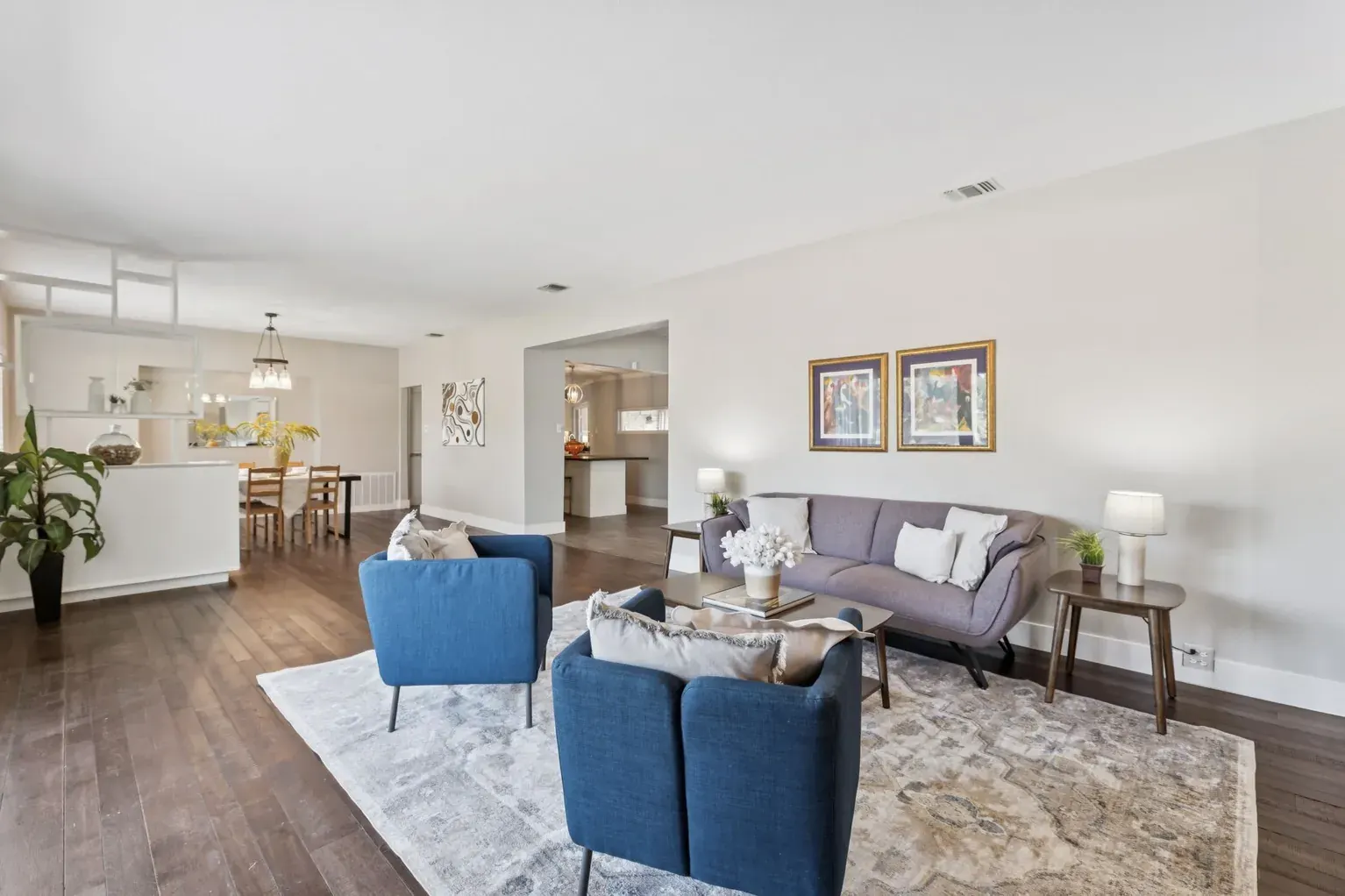
Small rooms need enough furniture to show their purpose, but not so much that buyers have to work around the layout. A compact sofa, a pair of chairs, or a small dining setup can show everyday use. The right answer depends on the room dimensions and the doorways, not on a fixed decorating formula.
Start by checking the path a buyer takes through the room. From the entry, can they see where to walk next? Can a door swing open? Does a chair make the route to a bedroom or patio feel pinched? Remove or reposition pieces that interrupt those paths before adding accessories. Clear circulation often matters more to a showing than another decorative object.
Then look at what the furniture says about scale. A large sectional can swallow a narrow living room. Several tiny tables and stools can create the same crowded effect. One purposeful seating arrangement is easier to read than a collection of small items. The same principle applies to rugs, lamps, and wall decor. Use them to define the room, not to fill every open surface.
Use photos as the test, not only the view from your usual seat. A piece that feels normal in daily life can dominate a wide-angle photo. Stand at each doorway with your phone and look for hard edges that break the path, piles that pull attention, or furniture that leaves no visual rest. The camera does not need a perfectly styled room. It needs a room where the layout is easy to understand. It also makes packing and showing-day routines less disruptive.
For occupied homes, packing early can be part of staging. It reduces visual noise, makes cabinets easier to photograph, and gives you fewer items to manage once showings begin. Keep enough everyday function for the seller, but let the rooms communicate their primary job first.
Which rooms should you prioritize before listing photos?
Prioritize the rooms that carry the listing story, then address the rooms that create doubt. In many small San Antonio homes, that means the entry, living room, kitchen, primary bedroom, and any flex room that lacks a clear purpose. NAR's staging research gives context for focusing on commonly important rooms, while the actual priority should come from your own listing photos and walkthrough.
Use this short pre-photo check for each room:
Two or more problem answers point to a room that should be edited before photos. Start there rather than trying to stage the entire house at once. A clear living room, calm kitchen surfaces, and a bedroom that shows where the bed fits can help a small home read well. Decorative touches in every space can work against that goal.
The same approach helps Realtors prepare a seller conversation. Instead of telling a seller that the home needs additional staging, point to the photo issue and the next move. Staging support for Realtors can turn that list into a practical scope, whether the work is a consultation, seller editing plan, partial staging, or vacant installation.
- Can a buyer identify the room's main purpose without explanation?
- Is there a visible walking path through it?
- Do countertops, shelves, closets, or corners suggest usable storage rather than overflow?
- Does the furniture show realistic scale for the room?
When is a lighter prep plan enough?
A lighter plan may be enough when the home already has clean surfaces, furniture that fits the rooms, clear paths, and one readable purpose for each major space. In that situation, professional cleaning, decluttering, basic styling, and a photo-readiness walkthrough may solve the issue without a larger staging package.
That decision still deserves a careful look. A tidy home can still photograph poorly. The dining table may be too large, a bedroom may be serving as storage, or a vacant room may give buyers no cue about its use. Take test photos from the doorway and from the angle a listing photographer is likely to use. If the room looks crowded, confusing, or unfinished on screen, bring that image to a staging consultation.
Virtual staging is another separate decision. It can help show a possible furniture layout, but the image must accurately represent the property and follow applicable listing and REALTOR disclosure requirements. Do not use it to hide permanent conditions or create a room that the home does not support. The NAR Code of Ethics provides current national guidance for REALTOR advertising and representations.
For a small San Antonio listing, the useful outcome is a home that buyers can understand quickly and honestly. Book a consultation when you want a room-by-room recommendation before photos, or ask your Realtor to include staging in the pre-listing plan.
Related home staging services
Sources
Should You Stage a Small San Antonio Home? FAQs
Do I need to stage every room in a small home?
Usually no. Start with the rooms that make the listing hard to understand, such as the living area, kitchen, primary bedroom, entry, or an unclear flex room.
Can occupied staging work if I am still living in the house?
Yes. Occupied staging often focuses on editing existing furniture, packing overflow, clearing paths, and giving each room a readable purpose before photos and showings.
Is partial staging a good option for a vacant home?
It can be. A partial install can focus on the living area, dining area, or another room that needs a clear sense of scale and function.
Will staging guarantee a higher price or faster sale?
No. Staging is a listing-presentation tool. Industry research can describe surveyed agent perceptions, but the result for one home depends on the property, pricing, condition, and market response.