
By Valarie Adams · September 3, 2026
Should You Stage a Vacant San Antonio Home Before Scheduling Listing Photos?
An empty home can look clean while still leaving listing photos with a scale or room-purpose problem. Use this San Antonio guide to decide which rooms need staging before the camera arrives and which preparation can stay focused.
Should You Stage Before Scheduling Listing Photos?
Stage before photography when vacancy creates a camera-read problem. An empty room can look clean and spacious in person while leaving a listing photo without enough information about scale, function, or the relationship between adjoining spaces. The decision is about what the photo communicates, not whether the room needs more decoration.
For a San Antonio seller or Realtor, start with the likely photo set. Look at the entry view, the main living space, the primary bedroom, the dining area, and any room whose use is not obvious. If a viewer can understand the room's purpose, proportions, route, and focal point without furniture, there may be little presentation work to add. If vacancy makes one of those points hard to read, resolve that issue before the camera appointment.
The National Association of REALTORS 2025 Profile of Home Staging reports that 83% of buyers' agents said staging made it easier for buyers to visualize a property as a future home. That is national survey context, not a prediction about sale price, days on market, or response to one San Antonio listing. It supports staging as a visualization tool when the empty room is creating a specific question for the viewer.
The useful next step is a camera-level audit. Photograph the rooms from likely listing angles, identify what the frame fails to explain, and schedule the preparation work early enough to review the installed result before the final shoot.
What Does Vacancy Hide From a Camera?
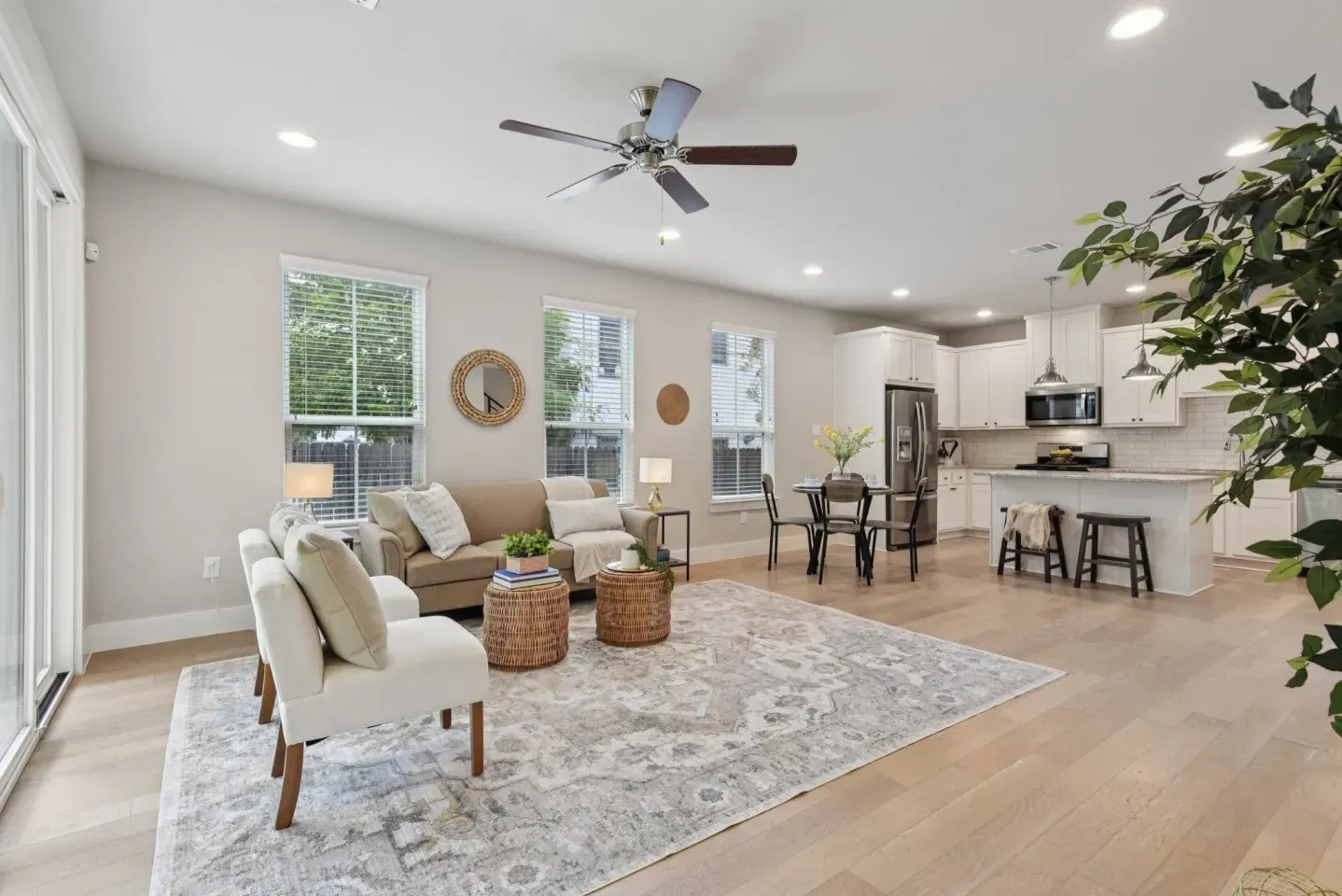
Vacancy can hide the visual reference points that help a viewer understand a room. A bare living area may not show where seating belongs. An open kitchen and living space may lack a clear boundary between uses. An empty bedroom can make its proportions harder to judge. A flex room can look like leftover floor area when nothing signals a practical purpose.
Review each likely frame with these questions:
The first frame matters, but do not review only the most attractive angle. Check the view from the entry, the relationship between adjoining spaces, and the route a buyer would follow during a showing. A room can look understandable from one corner and confusing from the angle that the listing photographer actually needs.
Keep the review tied to what a photograph can communicate. The camera does not need every room to look furnished. It needs the important rooms to show their proportions, boundaries, access points, and defining features without asking a buyer to guess.
- Is the room's function obvious without an explanation?
- Is the scale clear enough to understand furniture placement?
- Can a viewer follow the route through the room and the larger floor plan?
- Is the home's strongest feature visible, or does the empty space make it easy to miss?
What Does the NAR Evidence Support?
The research supports a visualization decision, not a sale-outcome claim. NAR's 2025 survey found that 83% of buyers' agents said staging made it easier for buyers to visualize a property as a future home. The survey also identifies living rooms, primary bedrooms, and dining rooms as the spaces staged most often. Those findings help a listing team decide where to look first, but they do not establish that every vacant San Antonio home needs the same rooms staged.
NAR's staging resources add a second layer of context by discussing staging and virtual staging as tools for vacant or occupied homes and by pointing to bedrooms, living rooms, and bonus spaces as useful areas to evaluate. That is different from treating furniture as a guarantee or using a national survey as a local market result. The evidence supports a room-specific review of what a viewer needs to understand.
For local applicability, confirm the conditions that the sources cannot answer for one property. Check local competition, staging availability, project cost, installation timing, access, and the photographer's calendar. A San Antonio listing may need a different preparation sequence than a nearby property in Boerne, New Braunfels, Schertz, or another service area. The research gives the decision frame. The listing team still has to verify the practical details.
How Can You Test an Empty Room Before Booking Photos?
Use a short camera-read test instead of deciding from the doorway alone. Take a phone photo from the likely listing angle, then look only at the image. Do not rely on what you remember about the room while standing in it. The frame should show enough structure for someone unfamiliar with the home to understand the room's job and its connection to the rest of the plan.
If the image feels like a blank box, name the missing information. The issue may be scale, a missing seating zone, an unclear dining boundary, a bedroom without a useful reference point, or a focal feature that disappears in the open space. Once the problem is named, ask what visual cue would answer it without hiding a window, doorway, fireplace, built-in, or circulation path.
Also record what furniture would not solve. Staging should not cover unfinished repairs, maintenance concerns, or a condition issue that needs another professional. A room can need a staging decision and a separate property-preparation decision at the same time. Keeping those tasks separate prevents the photo plan from becoming a substitute for the work the home still needs.
Repeat the test after installation. Compare the new frame with the empty-room frame and ask whether the room became easier to understand. The point is not to make the room look busy. It is to give the camera enough information to show the home's real layout and strongest features.
How Should Staging and Photography Be Sequenced?
Set the photo plan after the camera-read test, then work backward from the appointment. Confirm when the property is accessible, when any remaining work is complete, when staging can be installed, and the photographer's availability. Verify the rental period and any travel or scheduling constraints for the San Antonio area.
After installation, walk the home from the planned photo angles. Check the first view from the entry, the route between living and dining areas, the primary bedroom's visible scale, and the way the furniture frames the home's strongest feature. Review the rooms as a set. One clear room cannot fix a photo sequence that jumps between unrelated or unfinished spaces.
Give the photographer a property that is ready for the agreed shot list. Keep access paths clear, remove items that do not belong in the frame, and allow enough time to make a small layout correction before the appointment. Those are presentation checks, not promises about how the market will respond.
Keep access, cleaning, repairs, staging, and photography in the same planning conversation instead of treating preparation as a last-minute checklist after the camera is booked. Confirm who owns each task and its deadline.
Ask the appropriate Realtor, broker, attorney, contractor, or other qualified professional about questions involving pricing, disclosures, repairs, contracts, or other matters outside staging. Staging organizes presentation. It does not replace advice about a property's condition or transaction.
What Should the Seller and Realtor Confirm?
Use the final review to confirm that the photo set answers the viewer's basic questions without making claims the property cannot support. The rooms should be clean and accessible, the furniture should fit the actual space, and the strongest features should remain visible. If a room still reads poorly after the camera-read test and installation, describe the remaining problem before requesting another change.
Compare the final frames with the original empty-room photos. Look for clearer boundaries, readable circulation, and a useful sense of scale. Do not judge the result only by whether the furniture looks attractive. The test is whether a viewer can understand the room faster and with fewer unanswered questions.
Confirm these items before the final appointment:
- The photo angle shows the room's purpose and usable scale.
- Furniture does not block a path, doorway, window, or defining feature.
- The open plan has visible zones without pretending the rooms are separate spaces.
- The installation date, access plan, rental period, and photographer schedule agree.
- The final images show the home accurately and do not rely on staging to hide a condition issue.
Related home staging services
Sources
Should You Stage a Vacant San Antonio Home Before Scheduling Listing Photos? FAQs
Does every vacant San Antonio home need staging before listing photos?
No. Stage when empty rooms make scale, purpose, layout, or focal points difficult to understand. If the rooms already photograph clearly, a full installation may not be necessary.
Which rooms should I stage first in an empty house?
Start with the living room, primary bedroom, dining area, and any bonus room with an unclear purpose. Then choose only the rooms where furniture would materially improve understanding.
Can targeted vacant staging be enough?
Yes. A focused installation can fit when one or two rooms create the main photo problem and the rest of the home already shows its purpose, scale, and flow.
When should vacant staging happen before listing photos?
Decide the scope before scheduling the final photo appointment, then confirm installation access, staging availability, the rental period, and the photographer's schedule. Review the rooms after installation.