
By Valarie Adams · July 10, 2026
What Should Sellers Remove Before a Staging Consultation?
A staging consultation works better when the home is secure and the visual noise is reduced, without emptying rooms before anyone can assess their scale and purpose.
What should come out before the staging consultation?
Start with the items that should not be visible during a listing appointment, photo session, or showing. Mail, financial papers, checkbooks, prescription medication, jewelry, firearms, spare keys, and small electronics belong in a secure place. The National Association of REALTORS recommends locking valuables and medication before showings. That is a security step, not a styling choice.
Next, remove the things that make a buyer look at the household instead of the room. Family photos, personal collections, crowded shelves, refrigerator notes, trophies, and highly specific decor can wait in a box. You are not trying to make the home empty or anonymous. You are giving the stager a clearer view of the property and giving future listing photos fewer competing details.
For an occupied San Antonio home, do not assume every item needs to disappear before the consultation. The stager still needs to see the sofa, dining table, rugs, art, storage pieces, and everyday layout. Those pieces reveal where traffic gets tight, where the scale is off, and where a room is trying to do too many jobs. Pack the excess first. Let the consultation decide what needs to be moved, replaced, or restyled.
How should sellers edit furniture and room flow?
Remove furniture that blocks the path a buyer would naturally take through the home. An extra chair at the hall entrance, a bench that crowds the bed, or a desk pushed into a living-room corner can make a usable room feel smaller in photos. NAR seller guidance also recommends placing extra furniture in storage.
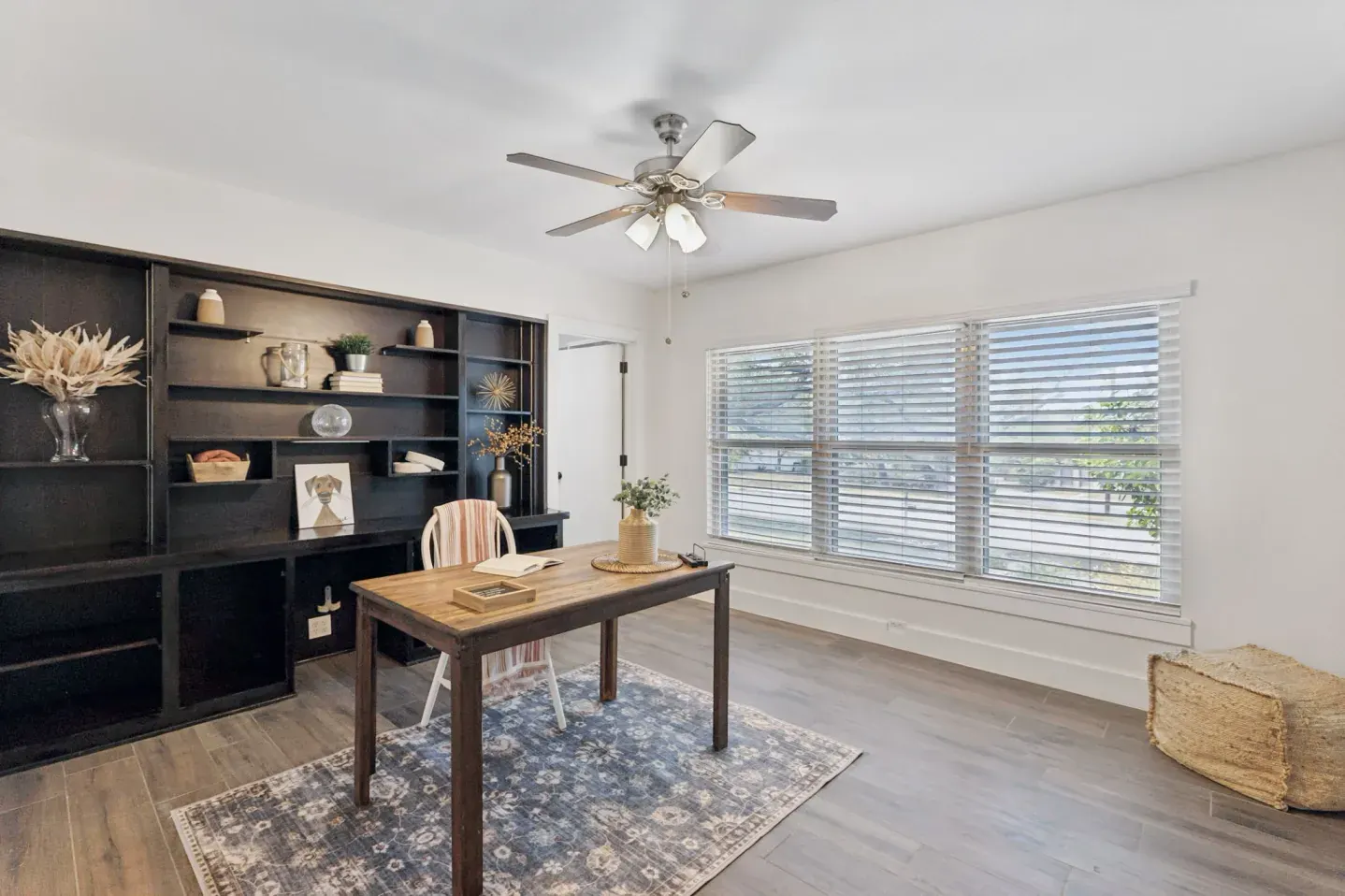
Keep enough furniture to explain the room's purpose. A living room still needs a readable seating area. A dining area should still look like a dining area. The goal is not a bare house. It is a room that can be understood without an explanation from the seller or Realtor. If one room holds office equipment, workout gear, guest storage, and a pet station, decide which job should be visible in listing photos. The rest can be packed or relocated.
Use a doorway test before the consultation. Stand at the entrance and look for a clear route, one obvious purpose, and a place for the eye to rest. If the first thing you see is a pile, a bulky piece, or a crowded corner, that item is a candidate for storage. Major pieces can stay until the stager weighs in. A consultation is where you decide whether editing is enough or whether a room needs partial staging support.
Which surfaces, closets, and personal areas need attention?
Kitchen and bath counters are fast visual tests. NAR recommends clearing them and neatly storing most items in drawers or cabinets. Leave only what helps the room read as functional. A coffee maker may be reasonable. A line of small appliances, charging cords, mail, water bottles, and daily toiletries usually is not.
Bedrooms need the same edit. Put away laundry, personal paperwork, extra pillows, under-bed storage that shows, and items that turn a nightstand into a catchall. In bathrooms, remove used towels, toothbrushes, products on the counter, and anything you would not want photographed. The purpose is a clean, usable surface, not a decorative display.
Closets, pantries, cabinets, and garages should be edited enough that the consultation can assess storage honestly. Do not cram everything from the counters into a closet. Pack seasonal goods, duplicate cookware, rarely used appliances, extra linens, and off-season clothes into labeled bins or off-site storage when possible. If a seller needs daily medication, work materials, or a child's supplies, keep them accessible but out of the likely photo path.
What should stay until the stager sees the house?
Leave the main furniture and room-defining pieces in place unless they are clearly unsafe, broken, or blocking a route. The stager needs to see how large pieces relate to windows, fireplaces, built-ins, door swings, and the normal flow from one room to the next. Removing everything early can create extra work and make it harder to tell whether an occupied plan, a partial install, or a different layout fits the listing.
Also leave a short list of practical constraints. Tell the stager which rooms must stay functional, whether the seller is working from home, where pets stay, what storage is available, and when photography is planned. Those details turn a generic decluttering list into a plan a household can maintain through showings.
For San Antonio sellers, the local angle is practical rather than statistical. A staging consultation should be tied to the listing and photography calendar, not to a promise about price or timing. Ask the stager to identify the photo-readiness leaks first, then assign each recommendation to one of three actions: keep and style, pack and store, or replace with a staging piece.
Use this four-label consultation checklist
Use four labels while you prepare. Secure now: valuables, medication, firearms, mail, financial papers, keys, and devices. Pack before photos: personal photos, excess decor, countertop clutter, out-of-season items, duplicate kitchen tools, and bulky extras. Leave for the stager to assess: the main sofa, dining furniture, rugs, wall art, beds, and room-defining pieces. Handle with a separate plan: pets, daily medical needs, work-from-home equipment, moving boxes, and items the seller still needs.
That last label matters. An occupied listing should be prepared for real life as well as photos. A plan that asks the seller to hide necessary items with no storage solution will fall apart before the first showing. Bring those constraints to the consultation so the staging recommendation works on an ordinary weekday, not only for one polished afternoon.
If the checklist reveals that several rooms are crowded, unclear, or hard to maintain, book a staging consultation before photography. Realtors can also use staging support for listings to turn the room-by-room list into a clear seller conversation and scope.
How can Realtors make the seller prep conversation easier?
Start with the image, not a broad request to declutter. Show the seller the doorway view or likely photo angle and name the problem. The dining table leaves no path to the patio. The primary bedroom looks like storage. The kitchen counter hides the work surface. A concrete observation gives the seller a reason to pack an item without turning the conversation into criticism of how they live.
Give the seller a short first-round assignment before the consultation: secure private items, clear horizontal surfaces, pack seasonal belongings, and remove only the obvious overflow. Keep the list limited enough that it can be completed before the appointment. Then use the stager's recommendations for the second round. That order prevents a rushed seller from moving important pieces or filling every closet with clutter.
A seller can also set aside one labeled box for items needed each day. That keeps chargers, paperwork, pet supplies, and practical household items from returning to counters and tabletops after the consultation. It also makes the showing-day reset faster and less stressful.
The final plan should identify who handles storage, cleaning, repairs, furniture moves, photography, and showing-day resets. Sellers should also know which changes are required before photos and which can wait. This is listing-prep coordination, not legal, tax, lending, or pricing advice. When a condition needs another specialist, the Realtor or seller can bring in the appropriate professional.
A well-prepared consultation saves the stager from sorting through daily clutter and gives the seller a realistic path from lived-in home to listing-ready home. The result is a clearer plan, not a promise about the transaction outcome.
Related home staging services
Sources
What Should Sellers Remove Before a Staging Consultation? FAQs
Should I remove all furniture before a staging consultation?
No. Remove obvious excess and anything unsafe or private, but leave the main furniture so the stager can assess scale, flow, and what the home needs.
What valuables should sellers secure before a showing?
Secure jewelry, medication, firearms, documents, spare keys, checkbooks, small electronics, and other items you would not leave accessible to visitors.
Do I need to empty closets before staging?
No. Edit and organize them. Pack seasonal, rarely used, and overflow items so storage reads as usable without hiding everything in one crowded space.
Will staging guarantee a higher sale price or faster sale?
No. Staging is a listing-presentation tool. The right plan depends on the home, its condition, pricing, photography, and market response.