
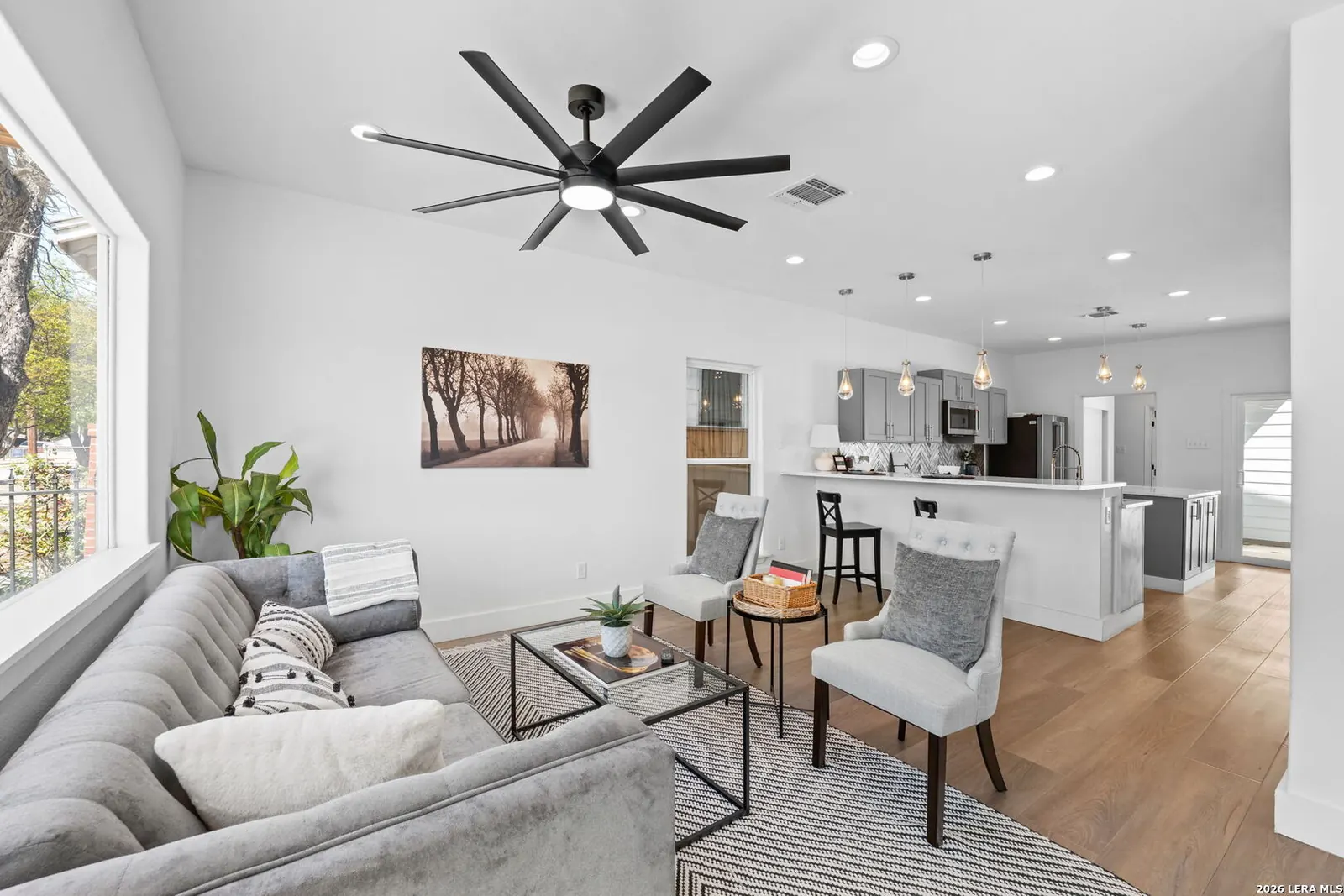
By Valarie Adams · October 6, 2026
When Does a Vacant San Antonio Listing Need Full Staging Instead of Virtual Staging?
Separate the photo problem from the actual walkthrough before choosing full physical staging or virtually furnished listing images.
Does the problem exist in the photos, in the home, or both?
Choose physical staging when furniture needs to do a useful job during the actual showing. Choose virtual staging only after separating that job from the work a photograph needs to do. A digitally furnished picture can suggest a room's use, but it cannot place a sofa in the house a buyer visits. The first decision is where the uncertainty exists, rather than which service sounds more comprehensive.
Start with two passes through the same vacant home. On the first, review ordinary, unchanged photographs with your listing agent. Note any space whose purpose is difficult to understand from the camera angle. On the second, walk the route a visitor will take from the entry through the main living areas. Notice whether the same uncertainty remains when you can see adjacent rooms, windows and doorways together. Write down the difference while it is specific.
For example, a room might look disconnected in a single photograph yet make sense when someone stands in the doorway. That is a photographic presentation question. A large open space might remain difficult to interpret even during a visit because there is no visible dining or seating arrangement. That is a showing question as well. These are examples to test against your house, not claims about what every San Antonio buyer needs.
Use the two passes to prepare a short brief for the agent and stager: what is unclear, where it is unclear, and what a proposed service will change. If you also need to coordinate repairs, cleaning and photography, the vacant-home photo preparation guide addresses that separate sequence. Keep the service comparison focused on what buyers will actually see and encounter.
What should your agent review in virtually staged photos?
Your agent should review whether the edited photographs present the actual property truthfully and meet the applicable listing requirements. Virtual staging is a digital furnishing service, as NAR's staging overview explains. Treat it as a defined image deliverable with a review step, rather than permission to change whatever makes a room harder to market.
Before ordering edits, give the provider clear instructions about the features that belong to the house. Ask what the service changes, what it leaves untouched and how you will receive revisions. Have the agent review the original and proposed images together, with attention to doors, windows, fixed fixtures and the room's proportions. Furniture should not become a way to imply that a physical limitation or visible condition has disappeared.
The 2026 NAR Code of Ethics, including Article 12 and Standard of Practice 12-10, sets truthful presentation obligations for REALTOR members. It does not establish one universal labeling instruction for every listing platform. Ask your agent which current MLS and brokerage requirements apply to this property, including how edited images should be identified and whether unchanged images should accompany them. Let that answer guide the upload plan.
Also discuss how the agent will explain the vacant walkthrough. A prospective buyer may remember a furnished image when opening the front door. An accurate description of what is digitally represented helps the photograph and the visit tell a consistent story. Save the originals and the approved final files so the listing team can resolve an image question without relying on memory. Digital furniture is an illustration of a possible arrangement; it is not an item included with the home.
When does physical furniture have a job digital images cannot do?
Physical furniture has a distinct job when the actual visit needs a visible arrangement to clarify how a space can function. It can show a seating relationship, suggest a dining location or make a transition between areas easier to read while someone moves through the home. A virtual image can depict an arrangement, but the visitor cannot walk around that depicted furniture inside an empty house.
Texas REALTORS' discussion of staging describes this difference between a furnished photograph and the experience of arriving at a vacant property. That is useful professional context for the comparison. It does not predict the price or marketing time of your particular listing. Your proposal should explain the intended presentation benefit without promising either outcome.
During the walkthrough, ask the stager to name the specific question each proposed arrangement answers. Does it establish a sensible seating area without obscuring a doorway? Does it explain how adjacent living and dining spaces relate? Can a visitor see the arrangement from the actual entry point, rather than only from the photographer's preferred angle? Those questions keep the installation connected to the house and its showing route.
Ask what a visitor will encounter in the spaces that remain empty, too. Physical staging does not have to eliminate every bare room to be useful. It does need a clear scope, appropriate placement and a plan for keeping the presentation in place during the agreed rental period. Furniture cannot repair a condition issue or make an inaccessible area accessible. Address those matters separately with the listing team before treating a staging proposal as the complete preparation plan.
How should you compare proposals for the same vacant listing?
Compare proposals using the same property brief, photo plan and showing needs. A digital-image quote and a physical-installation quote purchase different deliverables, so a total alone will not tell you which solves the problem you identified. Ask each provider to describe the finished work in terms you can check before approving it.
For virtual staging, confirm the images being edited, the proposed room uses, the revision process and who approves the finished files. Identify the person who will check the images against the originals and the current listing requirements. If photography has not happened, clarify whether the quoted work includes photography or begins with files you supply. Do not assume those services are bundled because they appear in the same conversation.
For a physical installation, confirm the spaces included, the planned furniture and the installation date relative to photography. Ask how long the rental lasts, how an extension is handled and when removal can be arranged. Identify who coordinates access, who receives questions about the installed pieces and which preparation work must happen before delivery. Use the written agreement for the actual responsibilities and terms rather than importing assumptions from another provider's package.
Put the answers into a simple comparison with three columns: the observed uncertainty, whether it affects photographs or showings, and the deliverable that addresses it. If a quote leaves the showing problem unchanged, record that plainly. If an installation includes rooms with no identified role, ask why they belong in the scope. For broader questions about portfolios and communication, use the guide to choosing a San Antonio staging company. The useful proposal is one you can connect to the presentation brief and execute within the listing plan.
Does needing physical staging mean furnishing every room?
No. A need for physical furniture does not automatically justify a whole-home installation. First decide whether the actual walkthrough needs furniture; then decide how much physical scope addresses that need. Full staging may be appropriate when several connected spaces need a coherent presentation, but the provider should explain why each included area matters to this home.
Ask for the proposed scope in plain language. A package name such as full staging can mean different things in different quotes. Which bedrooms, living areas and additional spaces are included? Which remain vacant? What will the photographs show? You should be able to match the room list to the walkthrough brief without discovering an important omission after delivery.
A targeted installation may be enough when the main showing uncertainty is concentrated in a few areas and the rest of the vacant home reads clearly. Conversely, a narrow package may leave the same uncertainty in the next connected space. Discuss that tradeoff with the agent and stager before selecting the smaller or larger scope. The partial-versus-full physical staging comparison addresses room scope in more detail once you have decided physical furnishings have a job to do.
Keep the final choice tied to a concrete plan: accurate approved images, a clear description of the actual vacant or furnished visit, a defined service scope and dates the listing team can coordinate. Avoid using a promised price increase to fill a gap in that plan. If you cannot explain what a proposed service changes for this property, ask for clarification before paying a deposit. The decision is ready when the deliverable, the walkthrough and the photography plan agree with one another.
Related home staging services
Sources
When Does a Vacant San Antonio Listing Need Full Staging Instead of Virtual Staging? FAQs
Can virtual staging replace furniture during a showing?
No. It adds furnishings to an image; the house remains vacant unless physical furniture is installed. Decide whether the actual visit needs an arrangement as well as the photographs.
Do virtually staged photos always require the same label?
Ask your listing agent to confirm the current MLS and brokerage requirements for your listing. Do not assume one universal labeling rule applies to every platform.
Does full staging include every room?
Confirm the room list in the provider's written scope. Package names can differ, and the quote should identify both furnished and vacant areas.
Can a seller use both physical and virtual staging?
Discuss the combination with the agent before ordering either service. Confirm which rooms are physically furnished, which images are digitally edited and how the actual showing will be described.
Should a seller choose a service based on a promised sale-price increase?
Use the specific presentation need and written deliverables to compare services. No proposal should substitute a projected price increase for a clear explanation of its deliverables.